March 20, 2026
Why Custom Websites Outperform Templates (And Actually Grow Your Business)
Why Custom Websites Will Always Beat “One-Size-Fits-All” Templates
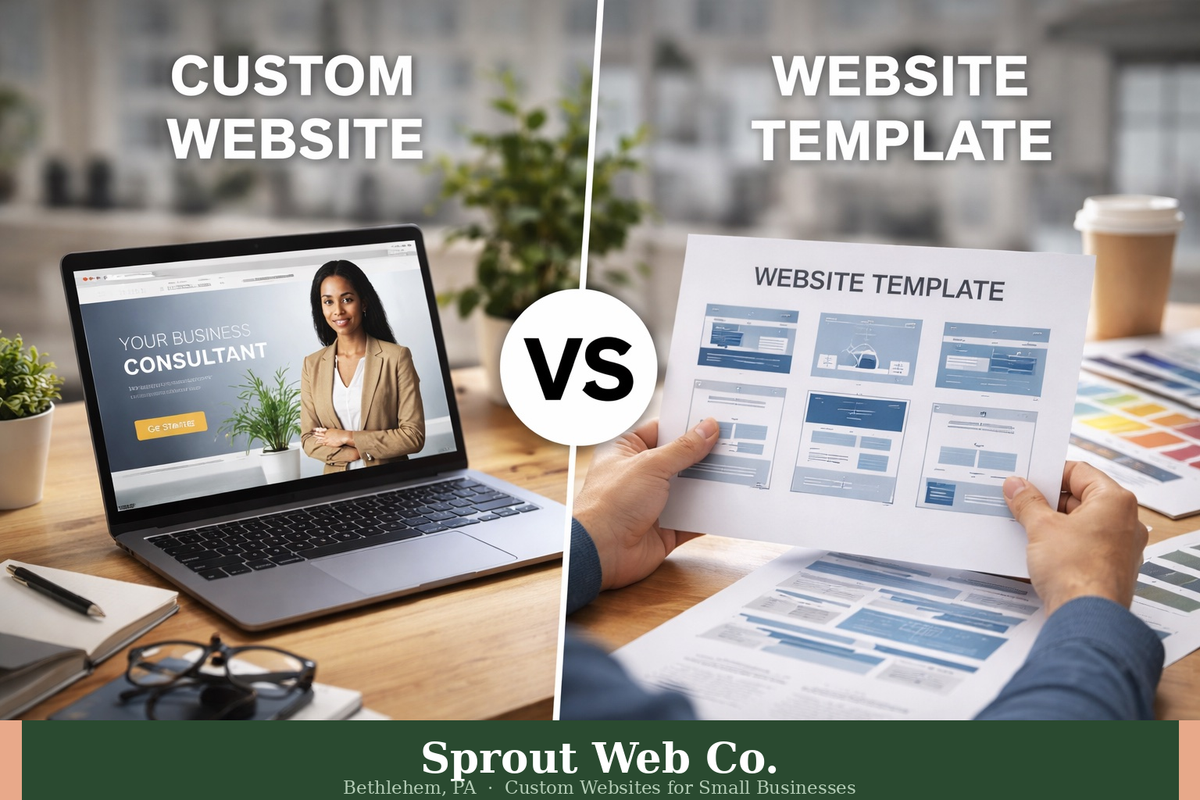
Let’s be honest—template websites are tempting.
They’re cheap. They’re fast. They promise you can “launch in a day.” And for a lot of people just starting out, that sounds perfect.
But here’s the truth most people don’t realize until later:
*A template website can get you online… but a custom website is what actually grows your business.*
Templates Are Built for Everyone (Which Means… No One)
When you use a template, you’re essentially renting someone else’s idea of what a business *should* look like.
The problem?
Your business isn’t generic.
* Your audience is different
* Your services are different
* Your goals are different
Yet templates force you into a box:
* Same layouts
* Same flow
* Same structure as thousands of other sites
That means your brand instantly blends in instead of standing out.
And in today’s world, blending in = getting ignored.
Custom Websites Are Built With Strategy — Not Guesswork
A custom website isn’t just about design—it’s about **intentional decisions**.
Every section, every button, every word has a purpose:
* Where do we want users to go first?
* What builds trust fastest?
* What makes someone actually take action?
Instead of trying to “fit your business into a template,”
a custom site is built to *fit your business perfectly.*
That’s the difference between:
“This looks nice” vs. “This makes people convert”
Speed vs. Performance: The Hidden Trade-Off
Templates are fast to set up—but often slow where it matters most.
They tend to come with:
* Extra code you don’t need
* Bloated features
* Slower load times
And guess what?
*Slow websites lose visitors. Fast.*
A custom website is lean, intentional, and optimized from the start—because it’s built specifically for *you*, not for thousands of users.
SEO Isn’t Just Keywords — It’s Structure
A lot of template platforms claim to be “SEO-friendly.”
But real SEO goes deeper than that.
Custom websites allow for:
* Proper page structure
* Strategic content placement
* Optimized user flow
* Better indexing by search engines
In simple terms:
*Templates help you exist. Custom sites help you get found.*
First Impressions Are Everything
Your website is often the first interaction someone has with your business.
And people decide fast.
Within seconds, they’re subconsciously asking:
* Does this feel professional?
* Do I trust this brand?
* Is this worth my time?
If your site looks like a slightly edited version of something they’ve seen before, you’ve already lost that edge.
A custom website gives you something templates can’t:
*A distinct identity.*
When Templates *Do* Make Sense
To be fair—templates aren’t “bad.”
They can work if:
* You need something temporary
* You’re testing an idea
* You have zero budget
But they’re a *starting point*, not a long-term solution.
The Bottom Line
Templates help you launch.
Custom websites help you grow.
If you’re serious about:
* Building a brand
* Standing out in your market
* Turning visitors into actual clients
Then a custom website isn’t a luxury.
It’s a *business tool*.
Final Thought
The goal isn’t just to “have a website.”
The goal is to have a website that actually **works for you**—even when you’re not working.
And that’s where custom makes all the difference.
If you're ready to move beyond cookie-cutter and build something that actually reflects your business,
this is where it starts.